How to Choose a Light Bulb: Fittings, Lumens and Colour Explained
Buying a light bulb used to mean grabbing a 60-watt and leaving. Now there are fittings, lumens, colour temperatures and smart features to weigh up, which is a lot for something you just want to screw in and forget. It’s simpler than it looks, though. Nail three things and you’re sorted. Here’s the plain-English version.
Match the fitting exactly (B22, E27, E14 or GU10). Choose brightness by lumens, not watts. Pick warm white for cosy rooms and cool white for kitchens and workspaces. Check it's dimmable if you use a dimmer.
Step 1: get the fitting right
This is the one that trips people up. Take your old bulb, or a photo of its base, and match it. The common UK fittings are:
- B22 bayonet, the classic push-and-twist.
- E27 large screw.
- E14 small screw, often in lamps and chandeliers.
- GU10 twist-lock, used in spotlights and downlights.
Get this wrong and nothing else matters, so check it first.
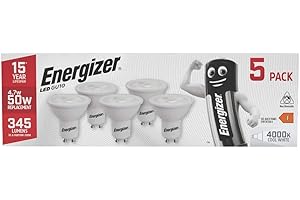 GU10 LED spotlights are a common, energy-saving swap for downlights. Check price on Amazon →
Step 2: brightness is measured in lumens
Since LEDs use far fewer watts than old bulbs, watts no longer tell you how bright a bulb is. Lumens do. As a rough translation, an old 60W bulb is around 800 lumens. Most listings show both the lumens and the “equivalent” wattage, so you can match your old bulb easily.
Step 3: pick a colour temperature
Colour temperature, shown in Kelvin (K), sets the mood:
- Warm white (around 2700K) feels cosy and relaxed, ideal for living rooms and bedrooms.
- Cool white and daylight (4000K and above) feel crisp and bright, better for kitchens, bathrooms and anywhere you need to see clearly.
Mixing warm and cool around the house is completely normal.
Don’t forget dimmable and smart options
If a bulb sits on a dimmer switch, check it’s marked as dimmable, since not all LEDs are. And if you fancy dimming, scheduling or changing colour from your phone, smart bulbs are worth a look, just check they work with your setup.
Ready to choose?
Browse current top-rated light bulbs, ranked by real customer reviews, then check today’s price on Amazon.
Related guides
- Lighting buying guide for lighting a whole room.
- Browse the full Lighting department.
As an Amazon Associate we earn from qualifying purchases.
Frequently asked questions
How do I know which bulb fitting I need?
Check the base of your old bulb. Common UK fittings are B22 (bayonet, push and twist), E27 (large screw), E14 (small screw) and GU10 (twist-lock spotlight). Match it exactly.
What do lumens mean?
Lumens measure brightness, not watts. As a rough guide, a traditional 40W bulb is around 470 lumens, 60W around 800, and 100W around 1,500. Look at lumens when comparing LED bulbs.
What colour temperature should I choose?
Warm white (around 2700K) is cosy and suits living rooms and bedrooms. Cool white and daylight (4000K and up) are crisper and suit kitchens, bathrooms and workspaces.