How to Choose a Badminton Racket: A Beginner-Friendly Guide
Walk into the racket aisle and it’s easy to feel lost. Weights, balances, tensions, flex ratings, all for something you just want to have a knockabout with. The truth is that as a beginner, most of it doesn’t matter much yet, and a few simple choices will serve you well. Here’s what to focus on.
For most beginners, a lighter, evenly balanced racket with a comfortable grip and medium string tension is the sweet spot. Save the specialist head-heavy, high-tension frames for when you've got the technique to use them.
Weight: lighter is friendlier at first
Racket weight is often shown with a “U” rating, where a higher number means lighter (so 5U is lighter than 3U). Lighter rackets are easier to swing and more forgiving, which is exactly what you want while you’re learning. Heavier rackets can add power for stronger, more experienced players, but they punish a slow swing.
Balance: where the weight sits
Balance describes whether the weight leans towards the head or the handle.
- Head-light rackets feel quick and are great for fast net play and defence.
- Head-heavy rackets add power to clears and smashes, but feel slower.
- Even balance sits in the middle and suits most newcomers, since it does a bit of everything.
If in doubt, even balance is the safe starting point.
Grip size and string tension
A comfortable grip makes a surprising difference to your control. If a grip feels slightly small you can build it up with an overgrip, so erring smaller gives you room to adjust. For strings, lower tension gives you more power and a bigger sweet spot, which helps beginners, while higher tension rewards a cleaner technique with more control.
Flexibility
Shaft flex is the last piece. A more flexible shaft is more forgiving and helps generate power with less effort, which suits beginners and slower swings. Stiffer shafts give control and speed to players who already swing fast. Most starter rackets are on the flexible side for a reason.
Don’t forget the rest of the kit
A racket is only part of the setup. You’ll want shuttles (nylon for durable practice, feather for a truer flight), and if you’re playing at home, a net makes all the difference.
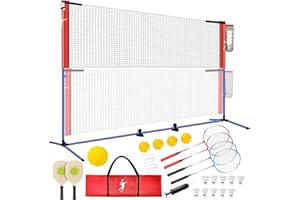 A portable net set gets a garden or park game going in minutes. Check price on Amazon →
Ready to choose?
Browse current top-rated badminton equipment, ranked by real customer reviews, then check today’s price on Amazon.
Related guides
- Sports equipment buying guide for the wider picture.
- Browse the full Sports department.
As an Amazon Associate we earn from qualifying purchases.
Frequently asked questions
What weight badminton racket is best for beginners?
A lighter, evenly balanced racket (often marked around 85-89g, or 4U/5U) is usually easiest for beginners. It's more forgiving and easier to swing while you build technique.
What string tension should I choose?
Lower tension gives more power and is friendlier for newer players, while higher tension offers more control for advanced players. If you're unsure, start mid-range and adjust later.
Does grip size matter?
Yes. A grip that's too big or too small hurts your control and comfort. You can build a smaller grip up with an overgrip, so many players start slightly smaller and adjust.